 Written by Fernando Martin| July 30, 2026
Adaptive Reuse Financing for Obsolete CRE Properties
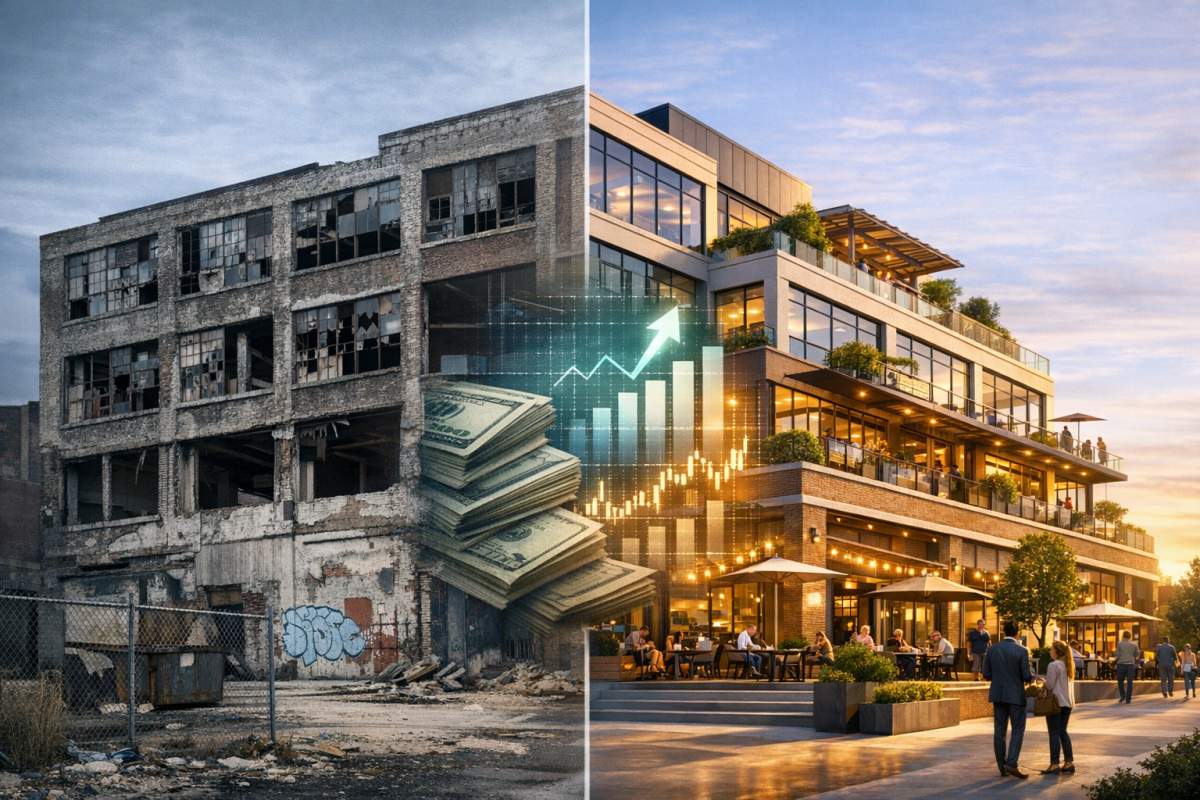
Adaptive reuse financing is expected to remain a major commercial real estate topic in 2026 as investors, developers, and owners reposition obsolete properties into more competitive uses. Across many markets, older office buildings, underperforming retail centers, aging hospitality assets, and certain special-use properties face declining demand in their original formats. Converting these properties into apartments, mixed-use projects, medical space, student housing, senior housing, or self-storage can create new value, but the financing structure is often more complex than a standard acquisition loan.
For borrowers, the challenge is matching the property’s current condition, business plan, and future use with the right capital source. Depending on the project, financing may involve Bridge loans, Construction loans, permanent Conventional Mortgages, or specialized multifamily executions such as FHA / HUD, Fannie Mae, or Freddie Mac.
What Is Adaptive Reuse in Commercial Real Estate?
Adaptive reuse is the conversion of an existing property from one use to another, usually with significant renovation, reconfiguration, code upgrades, and tenant improvements. In 2026, common examples include:
- Office-to-multifamily conversions
- Retail-to-medical office repositioning
- Hotel-to-apartment or supportive housing conversions
- Industrial or warehouse redevelopment into mixed-use space
- Obsolete commercial buildings converted to self-storage or specialty residential uses
These projects can solve functional obsolescence, improve occupancy, and align the property with modern market demand. However, they also carry execution risk, cost-overrun risk, lease-up risk, and valuation uncertainty.
Why Financing Obsolete CRE Properties Is Different
Lenders underwriting adaptive reuse projects look beyond the current income stream. Many obsolete assets have weak occupancy, deferred maintenance, outdated layouts, or limited cash flow support. As a result, financing is typically based on a combination of as-is value, renovation budget, sponsor strength, projected stabilized income, and feasibility of the new use.
Key underwriting issues often include:
- Zoning and entitlement risk
- Environmental and structural concerns
- Code compliance and life-safety upgrades
- Construction scope and contingency sizing
- Market demand for the converted property type
- Debt service coverage at stabilization
Borrowers should expect a more detailed lender review than for a stabilized property acquisition or plain-vanilla refinance.
Best Financing Options for 2026 Adaptive Reuse Projects
Bridge Loans
Bridge loans are often the first step when a property is not yet stabilized or financeable with permanent debt. They can work well for acquisitions, recapitalizations, and transitional projects where the sponsor needs time to complete renovations, resolve vacancy, or change the use. Bridge lenders usually focus on business plan quality, sponsor experience, and projected takeout financing.
Construction Loans
Construction loans are commonly used when the conversion requires major demolition, structural work, system replacements, or substantial interior reconfiguration. These loans may fund hard costs, soft costs, interest reserves, and contingencies. Lenders generally require plans, permits, contractor information, and a realistic draw schedule.
Conventional Permanent Loans
Once the project is completed and stabilized, a borrower may refinance into a long-term Commercial Loan or Conventional Mortgage. For properties with strong occupancy and durable cash flow, permanent financing can reduce borrowing costs and extend amortization.
Agency and Government-Backed Multifamily Financing
If the end use is multifamily, agency or government-backed debt may provide attractive long-term execution. Depending on the asset type, size, affordability component, and occupancy profile, borrowers may consider Fannie Mae, Freddie Mac, or FHA / HUD. These options are often relevant for office-to-apartment, hotel-to-residential, and affordable housing conversion strategies.
Property Types Seeing the Most Reuse Activity
In 2026, several property categories are likely to remain active candidates for conversion financing:
- Office buildings with high vacancy and outdated floorplates
- Retail properties affected by tenant downsizing and changing consumer patterns
- Hotel / Hospitality assets with weak operating performance
- Mixed-Use properties requiring re-tenanting and redesign
- Industrial / Warehouse buildings suitable for alternate uses in urban infill locations
How Borrowers Can Improve Approval Odds
Adaptive reuse borrowers can improve financing terms by presenting a credible and well-documented execution plan. Lenders want to see that the new use is legally permitted, physically feasible, and economically viable.
- Provide a detailed renovation and conversion budget
- Show market studies supporting the new use
- Include sponsor resume and relevant project experience
- Document zoning status, permits, and consultant reports
- Build in adequate contingency and interest reserves
- Demonstrate a clear refinance or exit strategy
Borrowers should also analyze leverage and cash flow carefully with tools such as the LTV Calculator, DSCR Calculator, NOI Calculator, and Cap Rate Calculator.
2026 Outlook for Adaptive Reuse Financing
Adaptive reuse financing for obsolete CRE properties should remain opportunity-driven in 2026. Capital is available, but it is selective. Projects with strong locations, realistic budgets, experienced sponsorship, and a proven demand story will usually have the best access to financing. The most successful borrowers are those who treat adaptive reuse not simply as a distressed property play, but as a disciplined redevelopment strategy with a well-structured capital stack.
Commercial Loan Direct helps borrowers evaluate financing options for transitional and permanent executions nationwide, including Commercial Loan Refinance, multifamily lending, and redevelopment-related structures. To discuss financing for an adaptive reuse project, visit our Apply page.