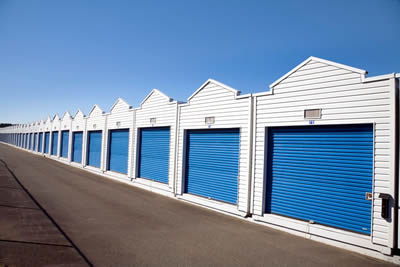
Self storage commercial loans are used to purchase, refinance, or renovate self storage facilities — properties that lease individual secured units to residential tenants and small businesses. Also known as mini storage or self-service storage, these facilities generate income through short-term rental agreements and are valued based on net operating income (NOI). The self storage industry is one of the most resilient sectors in commercial real estate, generating over $39 billion in annual revenue with occupancy rates that have consistently exceeded 90% nationally. Whether you own a single-story drive-up facility, a multi-story climate-controlled building, or a boat and RV storage operation, Commercial Loan Direct has loan programs designed for your property type and investment goals.
Self Storage Loan Programs
| Loan Type | Min Loan Amount | Max LTV | Term Length | Amortization | Rates |
|---|---|---|---|---|---|
| Conventional | $1,000,000 | 75 | 3 - 15 Years | 15 - 30 Years | 6.30% - 9.34% |
| CMBS | $2,000,000 | 75 | 5 - 10 Years | 20 - 30 Years | 6.89% - 8.59% |
| USDA | $1,000,000 | 85 | 5 - 15 Years | 15 - 30 Years | 6.25% - 9.00% |
| Bridge | $3,000,000 | 75 | 1 - 3 Years | 15 - 30 Years | 6.00% - 13.00% |
| Construction | $3,000,000 | 75 | 1 - 3 Years | 15 - 30 Years | 5.75% - 9.00% |
| Loan Type | Min Loan Amount | Max LTV | Term Length | Amortization | Rates |
|---|---|---|---|---|---|
| Conventional | $1,000,000 | 80 | 3 - 15 Years | 15 - 30 Years | 6.30% - 9.34% |
| USDA | $1,000,000 | 85 | 5 - 15 Years | 15 - 30 Years | 6.25% - 9.00% |
| SBA | $1,000,000 | 90 | 3 - 25 Years | 15 - 30 Years | 6.59% - 6.98% |
Types of Self Storage Commercial Loans
Self storage properties are eligible for multiple loan programs. The best option depends on loan size, property stabilization, borrower experience, and intended use of proceeds.
Conventional Bank Loans: Offered by community banks, regional banks, and credit unions, conventional self storage loans are best suited for well-stabilized facilities with experienced owner-operators. Terms typically range from 3 to 10 years with amortization periods up to 25 years. These loans are recourse and may require an existing banking relationship. Conventional lenders focus heavily on the borrower's credit profile, liquidity, and management experience in addition to the property's cash flow.
Conduit / CMBS Loans: Conduit loans, also called CMBS (Commercial Mortgage-Backed Securities) loans, are non-recourse and are ideal for larger, stabilized self storage portfolios or individual facilities with strong occupancy and NOI. These fixed-rate loans are securitized and sold to investors, which allows for more flexible underwriting than traditional banks. Standard amortization runs 25 to 30 years with balloon payments at the end of the term. CMBS self storage loans are particularly attractive for borrowers who do not meet the liquidity or net worth requirements of bank products.
SBA 7(a) Loans: The SBA 7(a) program is a popular option for owner-operated self storage facilities. The SBA guarantees a significant portion of the loan, enabling lenders to offer up to 80% LTV with terms up to 25 years and fully amortizing repayment schedules. This product is ideal for entrepreneurs looking to purchase or refinance a self storage business with a lower down payment. Proceeds can be used for acquisition, construction, renovation, working capital, and equipment.
SBA 504 Loans: The SBA 504 program pairs a conventional first mortgage (typically 50% LTV) with a Certified Development Company (CDC) second mortgage (up to 40% LTV), allowing borrowers to acquire or develop self storage properties with as little as 10% down. The CDC portion carries a long-term fixed rate, making 504 loans an excellent choice for borrowers who want rate certainty and low equity requirements. Owner-occupancy of at least 51% of the facility is generally required for the 504 program.
Bridge Loans: Bridge loans are short-term financing solutions — typically 12 to 36 months — used for self storage properties that are in lease-up, undergoing renovation, or transitioning ownership. Because bridge loans are underwritten on the property's projected stabilized value rather than current cash flow, they are well-suited for value-add opportunities and newly constructed facilities that have not yet achieved stabilized occupancy. Once the property is stabilized, borrowers typically refinance into a permanent loan product.
Life Insurance Company Loans: Life company loans offer some of the most competitive long-term fixed rates available for commercial real estate. These loans are reserved for high-quality, class-A self storage facilities in primary and secondary markets, typically with loan amounts starting at $5 million. Underwriting is conservative — requiring strong occupancy, experienced sponsorship, and low leverage — but the reward is industry-leading terms and rates without the prepayment structure of CMBS.
Self Storage Market Overview
The self storage sector has proven to be one of the most durable commercial real estate asset classes across economic cycles. Key industry characteristics that lenders and investors find attractive include:
- Over 50,000 facilities across the United States with more than 1.7 billion square feet of rentable space
- Recession resilience — demand for self storage increases during life events including job loss, downsizing, divorce, relocation, and death, making occupancy relatively stable during downturns
- Low operational intensity — compared to multifamily or retail, self storage requires minimal staffing, fewer tenant improvement expenses, and lower maintenance costs
- Short-term leases — month-to-month rental agreements allow operators to adjust rental rates quickly in response to market conditions
- Climate-controlled demand — demand for climate-controlled units continues to grow as renters store electronics, wine, documents, and furniture that require temperature and humidity regulation
- E-commerce tailwinds — small business owners and independent sellers increasingly use self storage as last-mile inventory space
Self Storage Lending Guidelines
Lenders evaluate self storage commercial loans based on the property's net operating income, physical and economic occupancy, unit mix, market position, and borrower financial strength. The key underwriting metrics used are the Debt Service Coverage Ratio (DSCR), Loan-to-Value (LTV), and Debt Yield. Lenders will also assess whether the facility is climate-controlled, the age and condition of the property, and local market competition.
Non-Recourse Loans (CMBS / Life Company):
- Minimum Loan Amount — $2 million
- Maximum LTV — 70–75%
- Minimum DSCR — 1.25x
- Minimum Debt Yield — 8–9%
- Term Length — 5–10 years (CMBS); 10–30 years (Life Company)
- Maximum Amortization — 25–30 years
- Occupancy Requirement — typically 85%+ economic occupancy
Recourse Loans (Conventional / SBA):
- Minimum Loan Amount — $500,000
- Maximum LTV — up to 80% (SBA); 65–75% (Conventional)
- Minimum DSCR — 1.20x–1.25x
- Term Length — up to 25 years (SBA); 3–10 years (Conventional)
- Maximum Amortization — 25 years
- Minimum Occupancy — 80%+ physical occupancy preferred
Preparing Your Self Storage Loan Package
Preparing a complete financial package before approaching lenders significantly accelerates the approval process. Self storage lenders focus heavily on operating statements and occupancy trends. We provide borrower templates on our financial forms page.
Non-Recourse Loan Package (CMBS / Life Company):
- 3 years of operating statements (income and expense detail)
- Current rent roll with unit mix (size, count, current rate, occupied/vacant)
- Month-by-month physical and economic occupancy for the trailing 24 months
- Property summary including total net rentable square footage, number of units, and unit breakdown by type
- Personal financial statement with schedule of real estate owned
- Offering memorandum or broker package (if acquisition)
- Property photos and site plan
Recourse Loan Package (Conventional / SBA):
- 3 years business tax returns
- 3 years personal tax returns
- Current balance sheet with debt schedule
- Current rent roll with unit mix and occupancy detail
- Trailing 12-month profit and loss statement
- Personal financial statement with schedule of real estate owned
- Business plan (required for SBA programs)
- Property photos and site plan
Self Storage Financing FAQs
What occupancy rate does a self storage facility need to qualify for a loan?
Most lenders require a minimum physical occupancy of 80–85% for permanent financing. Non-recourse lenders typically focus on economic occupancy (the percentage of gross potential income that the property actually collects), which accounts for concessions and discounted units and is often slightly lower than physical occupancy. For bridge loans and value-add transactions, lower occupancy is acceptable because underwriting is based on the stabilized pro forma rather than current performance.
What is the difference between physical and economic occupancy for self storage?
Physical occupancy is the percentage of units that are rented, regardless of the rent being paid. Economic occupancy is the ratio of actual collected income to gross potential income at 100% occupancy at market rates. A facility can be 90% physically occupied but have an economic occupancy of 82% if many units are discounted or have concessions. Lenders underwrite based on economic occupancy because it more accurately reflects the facility's revenue-generating capacity.
Are climate-controlled self storage units financed differently?
Climate-controlled facilities are generally viewed more favorably by lenders because they command higher rents per square foot and serve a broader customer base, including both residential and commercial tenants. While the loan product itself is the same, a climate-controlled facility may achieve a lower cap rate, higher appraised value, and better loan terms due to stronger and more stable cash flow.
Can I get a self storage loan for a facility under construction?
Yes. New construction and ground-up development can be financed through construction loans or bridge loans. These products fund the construction phase and then convert or refinance into permanent financing once the facility reaches stabilized occupancy — typically 85% or higher over a trailing 3-month period. SBA programs also offer construction financing for owner-operated self storage projects.
What are current self storage commercial loan rates?
Self storage loan rates vary based on the loan program, property characteristics, LTV, DSCR, and borrower credit profile. Indicative rate ranges for all programs including conventional, CMBS, SBA, and bridge financing are available on our commercial loan rates page. For a customized rate quote, submit a brief loan application and a member of our team will respond promptly.
What loan-to-value can I achieve on a self storage property?
LTV varies by loan program. Conventional bank loans typically range from 65 to 75% LTV. CMBS and non-recourse lenders generally cap at 70–75% LTV. SBA programs offer the highest leverage, reaching up to 80% LTV for qualified borrowers. Bridge lenders may go up to 80–85% of cost on value-add projects. Life insurance companies are the most conservative, typically capping at 60–65% LTV in exchange for the most competitive long-term rates.
Can I use a self storage loan to refinance and pull cash out?
Yes. Cash-out refinancing is available for self storage facilities across most loan programs. The amount of equity you can access depends on the appraised value, the allowable LTV for the program, and the current debt on the property. Lenders will underwrite the cash-out refinance the same way as a purchase — reviewing NOI, occupancy, DSCR, and borrower financial strength. Cash proceeds can be used for capital improvements, portfolio acquisitions, or general business purposes.
Do I need self storage management experience to qualify?
Management experience requirements vary by lender and loan type. Conventional lenders and SBA programs may require demonstrated experience in operating self storage or other commercial real estate. CMBS lenders are generally more flexible, particularly if the borrower is hiring a professional third-party management company. Partnering with a well-regarded self storage management firm can significantly improve your loan terms and approval probability if you are a first-time self storage owner.