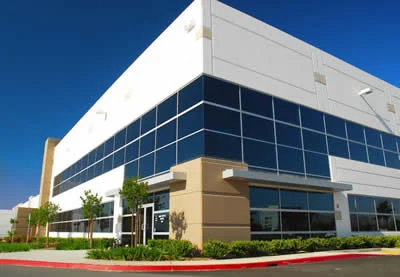
Industrial property financing covers the acquisition, refinance, construction, and repositioning of income-producing properties used for warehousing, manufacturing, logistics, and distribution. Industrial real estate is one of the strongest-performing commercial asset classes of the past decade, driven by explosive e-commerce growth, supply chain reshoring, and rising demand for last-mile distribution space in urban and suburban markets.
Whether you own a single-tenant net-lease distribution center, a multi-tenant flex park, a cold storage facility, or a bulk warehouse, Commercial Loan Direct has loan programs structured around your property type, occupancy, and investment objectives. We source financing from conventional banks, conduit lenders, life insurance companies, SBA programs, bridge lenders, and USDA — giving you access to the most competitive pricing in the market.
Industrial Property Loan Rates & Programs
Compare fixed and floating options across conventional bank, CMBS, life company, SBA, bridge, construction, and USDA programs. Use our DSCR calculator or NOI calculator to estimate your debt coverage before applying.
| Loan Type | Min Loan Amount | Max LTV | Term Length | Amortization | Rates |
|---|---|---|---|---|---|
| Conventional | $1,000,000 | 75 | 3 - 15 Years | 15 - 30 Years | 6.39% - 9.46% |
| CMBS | $2,000,000 | 75 | 5 - 10 Years | 20 - 30 Years | 7.00% - 8.71% |
| Insurance | $5,000,000 | 75 | 5 - 30 Years | 15 - 30 Years | 6.50% - 9.35% |
| USDA | $1,000,000 | 85 | 5 - 15 Years | 15 - 30 Years | 6.25% - 9.00% |
| Bridge | $3,000,000 | 75 | 1 - 3 Years | 15 - 30 Years | 6.00% - 13.00% |
| Construction | $3,000,000 | 75 | 1 - 3 Years | 15 - 30 Years | 5.75% - 9.00% |
| Loan Type | Min Loan Amount | Max LTV | Term Length | Amortization | Rates |
|---|---|---|---|---|---|
| Conventional | $1,000,000 | 80 | 3 - 15 Years | 15 - 30 Years | 6.39% - 9.46% |
| USDA | $1,000,000 | 85 | 5 - 15 Years | 15 - 30 Years | 6.25% - 9.00% |
| SBA | $1,000,000 | 90 | 3 - 25 Years | 15 - 30 Years | 6.59% - 6.98% |
Industrial Property Types We Finance
Types of Industrial Property Loans
Industrial properties are eligible for multiple loan programs. The right option depends on the property's occupancy and lease structure, the loan size, whether the property is owner-occupied or investor-owned, and the borrower's financial profile.
Conventional Bank Loans: Offered by community banks, regional banks, and credit unions, conventional industrial loans are ideal for well-stabilized properties with strong occupancy and experienced sponsorship. Terms typically range from 3 to 10 years with amortization periods up to 25 years. These recourse loans focus on the borrower's credit profile, liquidity, and experience alongside the property's net operating income (NOI). Conventional lenders are the most flexible in structuring creative solutions for industrial properties with environmental or functional complexity.
Conduit / CMBS Loans: CMBS (Commercial Mortgage-Backed Securities) loans are non-recourse fixed-rate instruments securitized and sold to institutional investors. They are ideal for larger, stabilized industrial properties and portfolios with strong in-place NOI and long-term leases. Standard amortization runs 25 to 30 years with balloon payments at the end of a 5- or 10-year term. CMBS industrial loans are particularly attractive for investors who prefer non-recourse execution and borrowers who do not meet the liquidity and net worth requirements of bank products. Single-tenant NNN industrial properties with investment-grade tenants are a preferred CMBS execution.
Life Insurance Company Loans: Life company loans offer the most competitive long-term fixed rates available for commercial real estate. These loans are reserved for high-quality, institutional-grade industrial assets in primary and secondary markets — typically starting at $5 million. Underwriting is conservative, requiring strong occupancy, creditworthy tenancy, experienced sponsorship, and low leverage (55–65% LTV). The reward is industry-leading pricing, longer fixed-rate periods (10–30 years), and no prepayment structure as punishing as CMBS defeasance.
SBA 7(a) Loans: The SBA 7(a) program is the go-to solution for owner-occupied industrial properties. The SBA guaranty allows lenders to offer up to 80% LTV with terms up to 25 years and fully amortizing repayment schedules — significantly reducing the equity required compared to conventional financing. Eligible uses include acquisition, ground-up construction, renovation, equipment purchase, and working capital. The borrower must occupy at least 51% of the property. SBA 7(a) is especially well-suited for manufacturers, logistics companies, and other operating businesses purchasing their own facility.
SBA 504 Loans: The SBA 504 program pairs a conventional first mortgage (typically 50% LTV) with a Certified Development Company (CDC) second mortgage (up to 40% LTV), enabling borrowers to acquire or develop industrial properties with as little as 10% down. The CDC portion carries a long-term fixed rate set at below-market levels, making 504 loans an excellent choice for owner-occupiers who want rate certainty and maximum leverage. Owner-occupancy of at least 51% is required. The 504 program is particularly effective for manufacturers purchasing or building facilities over $2 million.
Bridge Loans: Bridge loans are short-term financing solutions — typically 12 to 36 months — designed for industrial properties in transition. This includes properties in lease-up, undergoing renovation or repositioning, being acquired at below-market rents, or newly delivered from construction. Because bridge loans are underwritten on the stabilized pro forma value rather than current cash flow, they accommodate value-add business plans that conventional lenders cannot. Once the property achieves stabilized occupancy, borrowers refinance into a permanent loan. Bridge lenders may provide up to 80–85% of total project cost.
Construction Loans: Ground-up construction financing is available for industrial development projects including speculative ("spec") warehouses, build-to-suit facilities, and industrial parks. Construction loans fund the development phase on a draw schedule tied to construction milestones. Upon completion and lease-up, the loan is either paid off or converted to permanent financing. Recourse is typically required during the construction phase. Lenders evaluate the developer's track record, market absorption rates, pre-leasing activity, and the project's pro forma upon stabilization.
USDA Business & Industry Loans: For industrial properties located in rural markets (populations under 50,000), the USDA Business & Industry (B&I) loan program provides federally guaranteed financing with competitive rates and terms up to 30 years. B&I loans can be used for acquisition, construction, expansion, and modernization of industrial facilities. The USDA guarantee reduces lender risk, enabling financing in markets that conventional lenders might consider underserved.
Industrial Real Estate Market Overview
Industrial real estate has outperformed virtually every other commercial property sector over the past decade. Structural tailwinds from e-commerce, supply chain diversification, nearshoring, and last-mile logistics demand continue to drive absorption. Key market characteristics that lenders and investors find compelling include:
- Record-low vacancy — National industrial vacancy has remained below 5% in recent years, with primary logistics hubs like the Inland Empire, Dallas-Fort Worth, and New Jersey/New York reporting even tighter conditions.
- Rent growth — Industrial asking rents have grown significantly as new supply struggles to keep pace with demand, particularly for modern bulk distribution facilities with 36-foot or higher clear heights.
- E-commerce demand — Online retailers and third-party logistics providers (3PLs) require three times more space than traditional brick-and-mortar retailers for the same sales volume, driving sustained demand for last-mile and distribution space.
- Nearshoring and reshoring — Manufacturing returning to North America from overseas is generating demand for both light and heavy manufacturing facilities across the Sunbelt and Midwest.
- Cold chain expansion — Growth in food delivery, pharmaceuticals, and biotech is driving demand for temperature-controlled warehousing, a sub-sector with limited existing supply and high barriers to entry.
- Short lease-up periods — New industrial developments in high-demand markets are often pre-leased or reach stabilization faster than most other commercial property types, reducing lease-up risk for lenders and investors.
- Low capex requirements — Industrial properties require significantly less tenant improvement (TI) spend than office or retail, resulting in stronger net cash flow margins and lower total cost of ownership.
Industrial Property Lending Guidelines
Lenders underwrite industrial property loans based on net operating income (NOI), occupancy, lease structure, tenant credit quality, property functionality, and borrower financial strength. The three primary underwriting metrics are the Debt Service Coverage Ratio (DSCR), Loan-to-Value (LTV), and Debt Yield. Use our DSCR calculator to check your property's coverage before applying.
| Metric | Non-Recourse (CMBS / Life Co.) | Recourse (Bank / SBA) | Bridge |
|---|---|---|---|
| Min. Loan Amount | $2M (CMBS) / $5M (Life Co.) | $500K+ | $1M+ |
| Max LTV | 70–75% | 75–80% (SBA: 80–90%) | 80–85% of cost |
| Min. DSCR | 1.25x | 1.20x–1.25x | Underwritten to pro forma |
| Min. Debt Yield | 7.5–9% | N/A | N/A |
| Term Length | 5–10 yrs (CMBS); 10–30 yrs (Life Co.) | 3–10 yrs (Bank); up to 25 yrs (SBA) | 12–36 months |
| Amortization | 25–30 years | Up to 25 years | Interest-only |
| Min. Occupancy | 85–90% (or single NNN tenant) | 80%+ preferred | Value-add / lease-up OK |
| Recourse | Non-recourse with carve-outs | Full recourse | Typically recourse |
Key Underwriting Considerations
- Clear height — Modern lenders favor properties with 24-foot minimum clear heights. Buildings with 32-foot or greater clear heights command premium valuations and the best terms.
- Dock-high loading — The ratio of dock doors to building square footage is an important functionality indicator. Grade-level loading alone limits the lender pool.
- Column spacing — Wide-bay industrial buildings with 50-foot or greater column spacing are more marketable and receive more favorable underwriting.
- Office component — A small office buildout (10% or less of total square footage) is standard for industrial properties and does not impair value. Larger office components may require adjustments to NOI.
- Environmental — Lenders require a Phase I Environmental Site Assessment for all industrial properties. Phase II testing may be required based on Phase I findings or property history.
- Lease structure — Absolute NNN, double-net, and modified gross leases are all financeable. Lenders analyze rent levels relative to market, lease term, and rent escalation provisions.
- Tenant credit — For single-tenant properties, the creditworthiness of the tenant is as important as the property itself. Investment-grade tenants with publicly rated credit unlock the broadest lender pool.
Preparing Your Industrial Loan Package
A complete financial package accelerates the approval process and improves your negotiating position with lenders. Industrial lenders focus heavily on lease documentation, operating history, and tenant credit. We provide borrower templates on our financial forms page.
Non-Recourse Package (CMBS / Life Company)
Rent roll with full lease abstracts (tenant, SF, base rent, term, options, escalations) · 3 years operating statements · Trailing 12-month P&L · Personal financial statement with real estate schedule · Property photos and site plan · Offering memorandum (if acquisition) · Current tenant financial statements if single-tenant
Recourse Package (Bank / SBA)
3 years personal and business tax returns · Current balance sheet with debt schedule · Rent roll and lease copies · Trailing 12-month P&L · Personal financial statement with real estate schedule · Business plan (required for SBA) · Property photos and site plan · Environmental and engineering reports (if available)
Why Choose Commercial Loan Direct for Industrial Property Financing?
Industrial property financing requires lenders with experience across a wide range of property types, lease structures, and market conditions. Commercial Loan Direct brings national lender relationships and specialized expertise to every industrial transaction:
- Access to 200+ lenders — We source from banks, credit unions, conduit lenders, life companies, debt funds, and government programs to find the most competitive terms for your transaction.
- All industrial subtypes — From bulk warehouse to cold storage, truck terminal to flex industrial, our team has closed loans on every industrial property type.
- Non-recourse expertise — We structure CMBS and life company executions for stabilized, cash-flowing industrial assets that meet non-recourse underwriting criteria.
- SBA programs for owner-occupiers — Our SBA specialists guide manufacturers and logistics operators through the 7(a) and 504 programs to maximize leverage and minimize equity requirements.
- Bridge and value-add — We source short-term bridge financing for lease-up, renovation, and repositioning projects with a clear path to permanent financing.
- Transparent process — No hidden fees, no bait-and-switch pricing. We present binding term sheets and work to close on the terms quoted.
- Nationwide execution — We finance industrial properties in all 50 states, including secondary and tertiary markets that many lenders underserve.
Industrial Property Financing FAQs
This page is a summary of potential terms and does not constitute a loan commitment. Formal credit approval and due diligence are required. Terms are subject to change without notice.