Securing an apartment loan involves several distinct phases — from
organizing
your financials to rate-locking and closing. Understanding each step helps you move
faster and avoid
common delays.
1
Organize Your Financials
Gather your trailing-12-month operating statement,
year-to-date
P&L, current rent roll, and occupancy history. Lenders size every loan
against your
actual net operating income (NOI), so clean, complete financials accelerate
underwriting.
2
Know Your Key Metrics
Lenders underwrite to three core metrics:
Debt Service
Coverage Ratio (DSCR) — typically 1.20–1.25×;
Loan-to-Value
(LTV) — generally 65–80% depending on program; and Debt
Yield
— NOI divided by loan amount, used widely in CMBS and bridge lending.
3
Select the Right Program
Match your loan need to the right execution: Agency
(Fannie/Freddie)
for stabilized assets with long-term fixed rates; FHA for maximum leverage;
bridge for
value-add and lease-up; CMBS for non-recourse flexibility; construction for
ground-up
development.
4
Submit Application & Term Sheet
Submit your loan request along with the property
package. Your
lender or correspondent will size the loan, run a preliminary underwrite,
and issue a term
sheet outlining rate, leverage, fee, and structure. Review all terms
carefully —
particularly prepayment, yield maintenance, and defeasance provisions.
5
Underwriting, Appraisal & Third-Party Reports
Once you accept the term sheet, formal underwriting
begins. This
includes an independent MAI appraisal, Phase I environmental report,
property condition
assessment (PCA), and for agency loans, a seismic report in applicable
zones. Lender
underwriters will verify income, expenses, and lease compliance.
6
Rate Lock & Close
Agency and CMBS loans typically allow a rate lock
once the
application is approved — locking in your coupon ahead of closing.
Construction and bridge
loans often float at a spread over SOFR. At closing, you'll execute loan
documents and fund.
Agency loans typically close in 45–60 days; FHA takes longer at 90–120 days.
Ready to start the process?
Our team will size your loan, identify the best
execution, and
guide you through every step — from application to close.
Fannie Mae financing is available nationwide in primary and secondary markets and is funded under the
Fannie Mae Delegated Underwriting Services (DUS) Program. These loans are for stabilized properties
only
with a minimum $750,000 loan amount with rates that can be fixed or floating. FNMA financing can be
used
for traditional multifamily properties, student housing, affordable housing, or independent senior
living. Maximum leverage is 80% on purchases and 75% on refinances within designated areas. Loans
may be
recourse or non-recourse.
A Freddie Mac Loan is a type of multifamily loan that is secured by a first-position mortgage on a
traditional, student housing, senior housing, or affordable housing property. These mortgages may be
held in the FHLMC portfolio (10% of mortgages) or sold to bond investors (90% of mortgages).
The Federal Housing Authority (FHA) guarantees these mortgages under the authority of the Department
of Housing and Urban Development (HUD), making them available nationwide. FHA loans are for
stabilized properties that have been operating for at least 3 years (under the 223(f) program) or
for the construction of large projects (under the 221(d)(4) program) and are underwritten for 35–40
year self-amortizing loans with attractive rates. FHA multifamily mortgages can be used for
traditional multifamily properties, affordable housing, or senior living. Maximum leverage is
currently 83.3% on purchases and 80% on refinances with a minimum loan amount of $5 million for
purchase or refinance or $25 million for construction. Because the government guarantees these
loans, they are always non-recourse, except standard carve-outs.
Called portfolio, wholesale or conventional multifamily mortgages, these loans are funded by a bank
or other institutionalized lender which does not securitize or sell their loans into capital
markets. Because loans are not sold into the secondary market, terms may be more flexible than a
securitized loan and it is typically serviced by the lender. Maximum leverage can range from 75–85%
(in limited circumstances and areas). Personal guarantees are typically required, may be waived or
limited on occasion, depending on the leverage and program.
Conduit / CMBS loans are securitized loans that are pooled and sold on the secondary market. They are
available nationwide in all markets and are available for stabilized properties with a minimum $2
million loan amount. CMBS multifamily loans are typically only for traditional multifamily complexes
or independent senior living communities. Maximum leverage is 75% on both purchases and refinances
and loans are always non-recourse.
Life insurance companies are among the most competitive long-term lenders for high-quality stabilized
multifamily assets. These loans are typically available for properties with strong occupancy
histories, experienced sponsorship, and primary or major secondary markets. Insurance company loans
offer some of the lowest rates in commercial real estate lending, long fixed-rate terms, and are
generally non-recourse. Minimum loan amounts typically start at $5 million, and leverage is
conservatively sized — usually 60–70% LTV — to meet the risk profile of institutional insurance
portfolios.
USDA guaranteed mortgages can be used for any commercial real estate collateral that is located in a
designated rural area (with a population of less than 50,000 people). Maximum LTV is 90% under some
programs, but most have a maximum of 80–85%. USDA mortgages are almost always full recourse.
After two years of rate volatility and liquidity
contraction, the multifamily lending market has rebalanced in 2026. Agency lenders remain dominant,
bridge capital has returned for well-positioned value-add deals, and record apartment demand
continues to support strong NOI fundamentals across most major markets.
~6%
National Avg. Vacancy Rate
$100B+
Annual Agency Origination Volume
5.0–6.5%
Typical Cap Rate Range
400K+
Annual Unit Demand Shortfall
Agency Lending Remains the Anchor
Fannie Mae and Freddie Mac continue to underpin multifamily
capital markets in 2026, offering the most competitive long-term fixed rates for stabilized
properties. Combined, the GSEs fund the majority of apartment loans nationwide and remain
the preferred execution for borrowers seeking non-recourse, long-term certainty.
Workforce Housing in High Demand
Class B and C workforce apartments are outperforming luxury
properties on occupancy and rent growth. With homeownership affordability near historic
lows, renter demand at the mid-market tier remains structurally elevated — making workforce
housing one of the most compelling multifamily investment stories of the decade.
Bridge Lending Back for Value-Add
After a sharp pullback in 2023–2024, bridge lenders have
re-entered the market in 2026 with more conservative underwriting standards. Sponsors with
strong track records and sub-70% LTV requests are finding competitive SOFR-based pricing on
value-add repositioning and lease-up transactions.
Construction Lending Tightened but Active
New multifamily construction lending remains available but
requires stronger equity positions, experienced sponsorship, and markets with identifiable
absorption. HUD/FHA 221(d)(4) construction loans are seeing renewed interest given their
attractive fixed rates and high leverage — particularly for affordable and workforce
developments.
Debt Maturities Creating Refi Opportunity
Hundreds of billions in multifamily debt originated during the
2020–2022 rate environment is maturing through 2026. Borrowers facing rate resets are
actively refinancing — some into permanent agency loans, others into short-term bridge
facilities to buy time before stabilizing for permanent execution.
Sun Belt Markets Lead Absorption
Despite elevated new supply deliveries in 2024–2025, Sun Belt
metros including Dallas, Phoenix, Atlanta, Nashville, and Charlotte continue to absorb
inventory faster than most gateway cities. Population growth, job creation, and relative
affordability keep these markets on lenders' preferred lists for multifamily origination.
FAQs About Apartment Loans & Multifamily Mortgages
Current rent roll, trailing-12 operating statement, year-to-date P&L, occupancy
history, and a capital plan if requesting cash-out or value-add proceeds.
Yes. Agency, CMBS, insurance, and many bridge executions are non-recourse with standard
bad-boy carve-outs; bank portfolio loans may be partial or full recourse depending on
leverage.
Many programs provide partial- or full-term interest-only based on DSCR, leverage, and
business plan; construction loans are commonly interest-only during the build and
lease-up.
Yes. Cash-out is available where DSCR/LTV allow; reserves for TI/LC and future capex can
be structured in bridge or permanent executions.
Timelines vary by program: conventional and CMBS loans typically close in 30–45 days;
agency (Fannie/Freddie) loans in 45–60 days; FHA loans take longer at 90–120 days due to
government processing requirements. Having your financials organized before submission
significantly speeds up the process.
Most multifamily lenders require a minimum DSCR of 1.20–1.25×, meaning your net
operating income must cover 120–125% of annual debt service. Agency lenders may apply a
stressed test rate above the actual note rate. Bridge lenders may underwrite to lower
in-place DSCR if the business plan supports rent growth to stabilized coverage at
payoff.
Yes — conditions have improved significantly compared to 2023–2024. Agency rates have
stabilized, cap rates have adjusted to align better with financing costs, and lender
appetite has returned for quality multifamily assets. Borrowers with stabilized
properties and strong sponsorship are finding competitive executions across agency,
CMBS, and insurance channels.
Commercial Loan Finder
Fill this form out to find the best commercial loan programs for your needs.
Get A Free Quote
Get a free commercial loan quote. This process does not affect your credit score.
Real Deals. Real Results.
Success Stories
See how we've helped borrowers across the country close complex deals and reach their goals.
SBA 7(a)
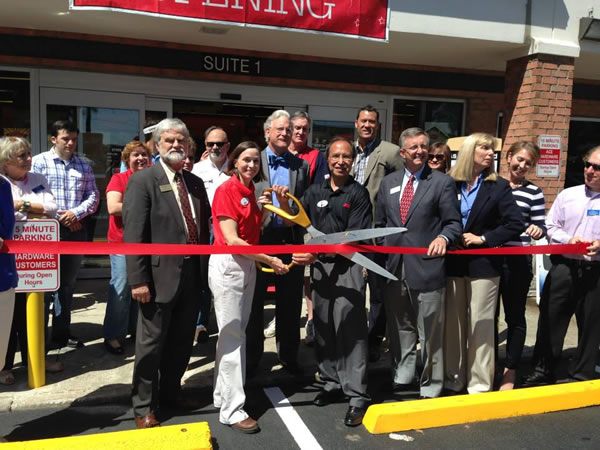
New Ace Hardware Franchise Financing
Alpharetta, GA Retail Franchise Real Estate + Working Capital
CLD was most helpful from answering my initial questions to the follow up... We would not have been able to start this business without CLD.
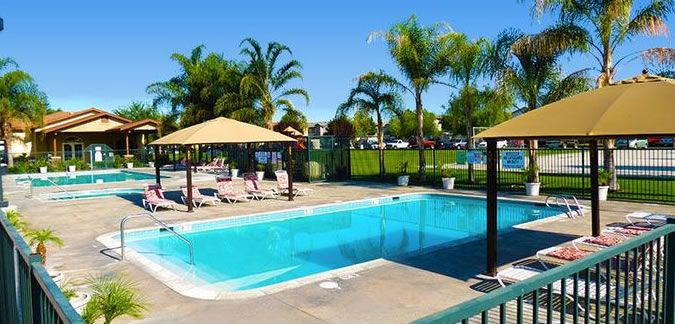
Bakersfield, CA Luxury Multifamily Non-Recourse · 10-Yr I/O
I had a tremendously good experience with CLD and especially with my loan specialist — she identified the ideal loan program and handled everything professionally.
Password is incorrect. If you forgot your password
please click the forgot password link (it opens in a new tab). Alternatively use a different
email if
you cannot recall your password.
 SBA 7(a)
 CMBS
CMBS
 Conventional