 Written by Fernando Martin| July 9, 2026
2026 CRE Debt Service Coverage Resets After Interest-Only Periods
Many commercial real estate borrowers heading into 2026 face a major underwriting event: the end of interest-only payments and the return to amortizing debt service. For owners of multifamily, office, retail, industrial, mixed-use, hospitality, and other income-producing properties, this shift can materially reduce debt service coverage ratio performance even when rents and occupancy appear stable.
When an interest-only period expires, the monthly payment usually increases because the loan must now cover both interest and principal over the remaining amortization schedule. As a result, a property that once met lender debt service coverage requirements may suddenly fall below target thresholds. That makes 2026 an important year for proactive refinancing, recapitalization, and asset management.
Why DSCR resets matter in 2026
Debt service coverage ratio, or DSCR, measures a property’s net operating income against its annual mortgage payments. Lenders use this ratio to determine whether a property generates enough cash flow to support the loan. A lower DSCR means tighter cash flow and higher refinance risk.
For many loans originated in prior lower-rate environments, interest-only structures helped maximize proceeds and reduce early-year payments. In 2026, those same loans may experience a significant payment shock due to:
- Transition from interest-only to amortizing payments
- Higher current market rates at refinance
- Flat or declining NOI in select property sectors
- Stricter lender stress testing and reserve requirements
- Reduced valuation support in weaker markets
Even a well-leased property can face pressure if cash flow growth has not kept pace with the increase in annual debt service.
How interest-only expiration changes loan performance
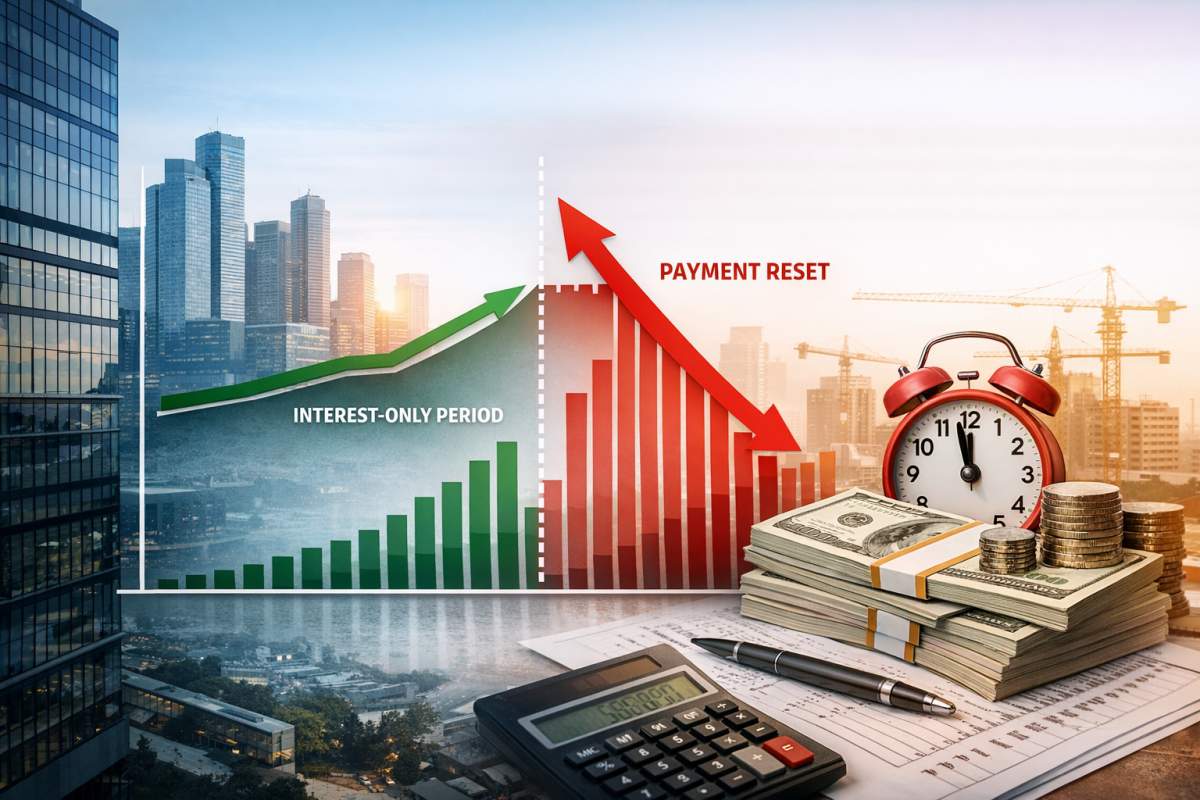
The issue is simple: debt service rises faster than many owners expect. During the interest-only period, the payment reflects only interest expense. After the reset, the lender recalculates payments based on the remaining term and amortization period. That often produces a sharp jump in required monthly debt service.
This can affect:
- Refinance proceeds
- Cash-out availability
- Sponsor liquidity needs
- Loan covenant compliance
- Disposition timing
Borrowers can estimate the impact by comparing interest-only debt service to fully amortizing payments with a Interest-Only Calculator and testing coverage with a DSCR Calculator.
Example of a DSCR reset
| Scenario | Annual NOI | Annual Debt Service | DSCR |
|---|---|---|---|
| During interest-only period | $1,250,000 | $900,000 | 1.39x |
| After amortization begins | $1,250,000 | $1,060,000 | 1.18x |
In this example, the property NOI is unchanged, but DSCR drops from 1.39x to 1.18x solely because the payment structure changed. That decline may push the loan below minimum lender requirements, which often range around 1.20x to 1.30x depending on asset type, leverage, and market conditions.
Property types most exposed
Not every asset will feel the same pressure. Properties with slower rent growth, capital expenditure needs, or rollover risk may be more vulnerable when debt service resets. In 2026, the most watched categories include:
- Office properties facing lease rollover and elevated vacancy
- Retail and shopping center assets with tenant turnover
- Mixed-use projects with uneven segment performance
- Hotel and hospitality properties with variable revenue
- Apartment loans on assets with expense growth outpacing rent gains
Stronger sectors such as certain industrial and self-storage properties may also face reset pressure if leverage was aggressive at origination or if sponsors delayed refinance planning.
Options for borrowers before DSCR deteriorates
The best strategy is to evaluate loan options before the interest-only period ends. Waiting until coverage has already fallen can reduce flexibility and increase borrower equity requirements.
- Refinance early through a Commercial Loan Refinance program
- Review current Commercial Loan Rates and compare execution alternatives
- Consider Conventional Mortgages for stabilized assets
- Evaluate Conduit / CMBS for larger properties seeking fixed-rate structure
- Use Bridge financing if the property needs lease-up, renovation, or seasoning
- Explore agency or government-backed multifamily options where applicable, including Fannie Mae, Freddie Mac, and FHA / HUD
For borrowers with transitional assets, a bridge loan can preserve time to improve occupancy, raise rents, or complete capital improvements before moving into permanent financing.
What lenders will review in 2026
As interest-only expirations accelerate, lenders will focus on current property performance rather than historic underwriting assumptions. Expect scrutiny on:
- Trailing 12-month NOI
- Updated rent roll and occupancy trends
- Debt yield and loan-to-value metrics
- Borrower liquidity and net worth
- Near-term capital expenditure needs
- Market rent and refinance comparables
Borrowers should also review metrics with a NOI Calculator, LTV Calculator, and Debt Yield Calculator to understand how lenders may size proceeds.
Planning ahead can protect refinance execution
The 2026 commercial real estate lending environment will reward borrowers who act early. Interest-only resets do not automatically create distress, but they do expose weak coverage and tighter loan sizing. Owners who understand the pending payment increase, document current property strength, and match the asset with the right capital source will have better refinance outcomes.
If your loan is approaching the end of its interest-only term, review your options now through our Commercial Loans platform, check available programs by market in Lending Locations, or start the process through our Apply page.